 Moisture management in buildings is a trending topic, as moisture related problems not only affect old buildings, but energy efficient new ones as well. In the United States, roughly 50% of all households reported the prevalence of dampness and mold. European households discovered these same issues, reporting them in about 20% of households.
The Fraunhofer Institute for Building Physics IBP has conducted research in this field for many years, and is dedicated to solving to these problems by providing software, experience, and solutions to organizations such as ASHRAE (American Society of Heating, Refrigerating, and Air-Conditioning Engineers). With contributions of Fraunhofer experts, a new chapter on moisture management in buildings was developed for ASHRAE’s Handbook of Fundamentals.
 The WUFI
 The new versions WUFI® Plus 3.1.0 and WUFI® Passive 3.0.1 have been released. Please find an overview of alterations and setup instructions in the
  WUFI
WUFI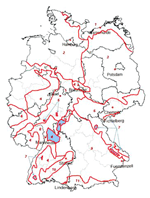 The higher the insulation level of a building component is the less heat is available for its drying. As a consequence of the better airtightness of the building envelope, in addition the indoor air humidity increases. Both together require also higher demands on the moisture protection of the building components. This is increasingly verified by means of a hygrothermal simulations like WUFI®. These methods need appropriate indoor and outdoor climate data. To close the existing gaps, as part of a research project the following topics were investigated